Management Lessons from Bollywood: An Innovative Pedagogy in Organizational Behaviour - By Dr. Shakti Awasthi
Management Lessons from Bollywood: An Innovative Pedagogy in Organizational Behaviour
Dr. Shakti Awasthi
Overview
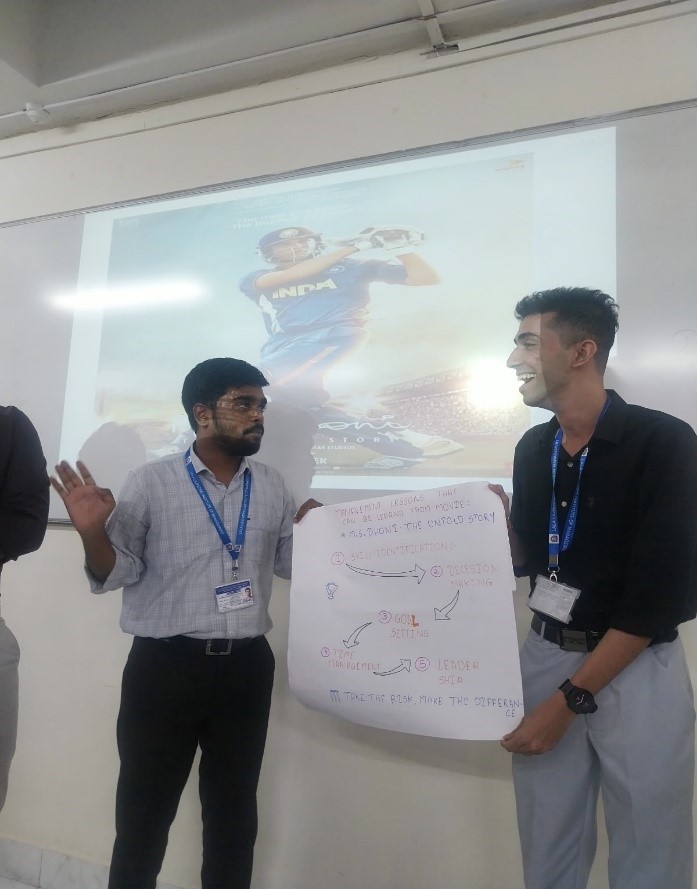
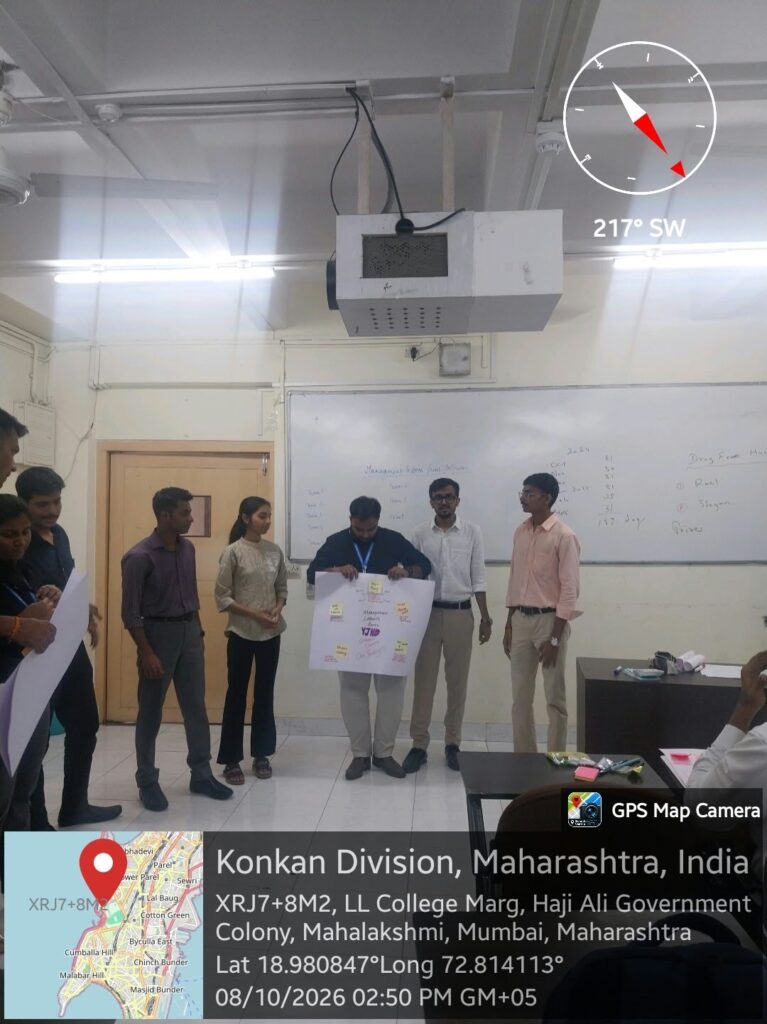
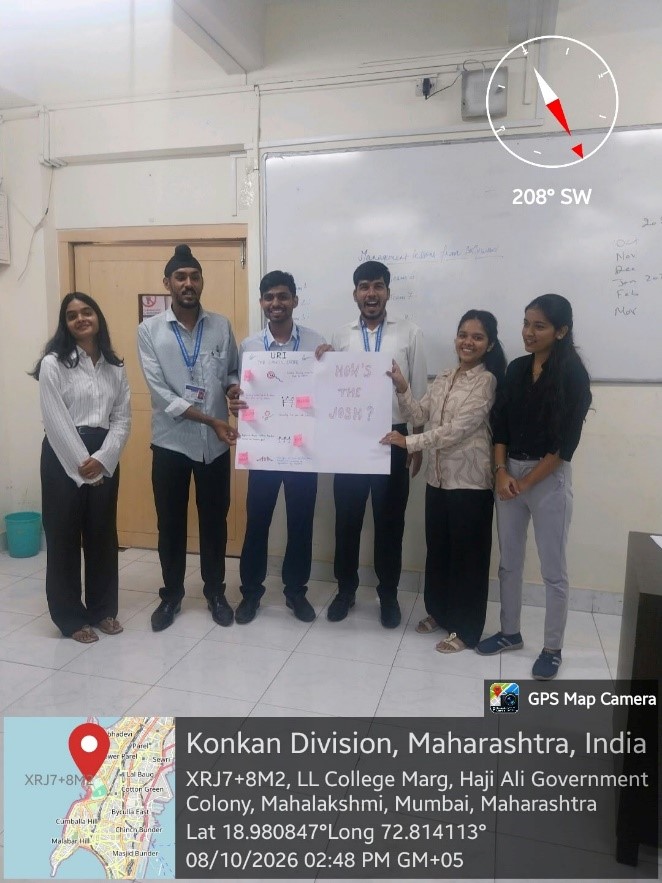
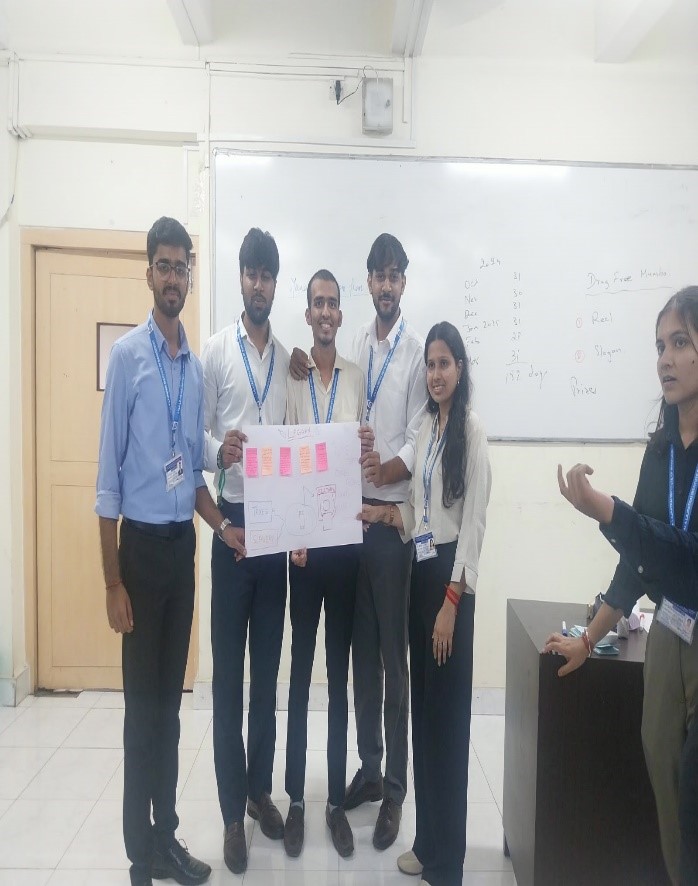
In this activity, MMS students learned Organizational Behaviour (OB) by studying a Bollywood film as a case and presenting its management lessons as a group. Each group chose one film, collected every member's learnings, selected a leader, and built a single chart with the consent and participation of all members. They then presented it in class.
The activity is an innovative pedagogy because the film becomes the case, the group becomes a live OB laboratory, and the students practice the very behaviours (leadership, communication, negotiation, consensus) that the course teaches.
Context and rationale
Organizational Behavioural studies how individuals, groups and structures shape behaviour at work. Concepts such as perception, motivation, leadership, group dynamics and conflict are abstract, and lectures alone often leave students able to define them but not to recognize them in practice.
Bollywood films suit this problem for three reasons:
- Familiarity: Students already know the stories and characters, so the cognitive load goes to analysis, not comprehension.
- Rich Behavioural material: Films portray leaders, teams, conflict, ethics, motivation and organizational culture in compressed, memorable scenes.
- Engagement: Discussing a film students enjoy lowers the barrier to participation, including for quieter students.
Illustrative films a group could choose include 3 Idiots (motivation, education culture), Chak De! India (team building, leadership), Dangal (goal setting, coaching) and Rocket Singh (ethics, sales culture).
Learning objectives
By the end of the activity, students should be able to:
- Identify and explain OB concepts as they appear in a real-world-style narrative.
- Contribute individual insights and build a shared group view through discussion.
- Recognize how leaders emerge in a group and what leadership behaviour the group values.
- Reflect on their own capability to work in a team.
- Understand why managing behaviour (their own and others') is central to group effectiveness.
- Communicate a consolidated idea visually and orally to an audience.
Activity design
The activity ran in six steps, with the faculty member acting as facilitator.
- Form groups. Students formed their own groups.
- Choose a movie. Each group agreed on one Bollywood film with clear management lessons.
- Share learnings. Every member put forward their own ideas about what the film teaches.
- Decide a leader. The group selected a leader by itself, without the teacher assigning one.
- Build one chart. The group prepared a single chart combining the ideas, with the consent and participation of all members.
- Present in class. Groups presented their charts, followed by discussion and faculty debrief linking the lessons to OB concepts.
The design leaves leader selection, film choice and consolidation of ideas entirely to the students. These decisions generate the group behaviour that the course then examines.
Link to OB concepts
Each stage of the activity maps to a core OB topic, so students experience the concept as well as read about it.
| Stage of activity | OB concept it illustrates |
|---|---|
| Forming the group and choosing a film | Group formation, Tuckman's forming and storming stages |
| Sharing individual learnings | Perception, communication, diversity of views |
| Selecting a leader | Emergent leadership, influence, leadership traits and styles |
| Merging ideas into one chart | Group decision-making, consensus, conflict resolution |
| Dividing work and preparing together | Team roles (Belbin), social loafing, accountability |
| Presenting in class | Communication, confidence, team coordination |
| Film content itself | Motivation, leadership, ethics, organizational culture, depending on the film |
How it helped the students
The activity helped students understand OB concepts in three main ways.
- Seeing leadership in action. Because groups chose their own leader, students could observe who emerged, why the group trusted that person, and what behaviours the leader showed. This made leadership theory concrete.
- Testing their own teamwork. Reaching one agreed chart required listening, persuading, compromising and sharing work. Students could see for themselves how well they function in a team.
- Understanding the need to manage behaviour. Differences of opinion, uneven participation and the need for consent showed that group outcomes depend on how members manage their own and each other's behaviour.
In addition, students linked film scenes to concepts, practiced presenting, and built the habit of looking for management lessons in everyday material.
Faculty note: add selected student feedback, observations from the debrief or any attendance and participation figures here to strengthen this section.
Assessment approach
Rubric used
| Criterion | What is assessed |
|---|---|
| Concept application | Accuracy of the link between film scenes and OB concepts |
| Depth of analysis | Insight beyond the obvious storyline |
| Group participation | Evidence that all members contributed to the chart |
| Creativity of the chart | Clarity, design and organization |
| Presentation | Communication, coordination and handling of questions |
Conclusion
Using Bollywood films as cases turned OB concepts into something students could discuss, enact and see in each other. By choosing a film, selecting a leader and agreeing on one chart, students practiced leadership, communication and consensus-building. They also learned who leads among them and how well they work in teams, and why managing behaviour in a group matters. The activity is low-cost, easy to repeat with a new batch, and adaptable to other OB topics such as motivation, power and organizational culture.
| Management Lessons from Bollywood Movies | ||||||
|---|---|---|---|---|---|---|
| Group No | Roll No | Concept application (3) | Depth of analysis (3) | Chart quality (2) | Presentation and teamwork (2) | Total (10) |
| Group 1 | ||||||
| Om Jawanjal | 2026077 | 2 | 3 | 2 | 2 | 9 |
| Abhishek Kanase | 2026084 | 3 | 3 | 2 | 2 | 10 |
| Pranav Kine | 2026093 | 2 | 3 | 2 | 2 | 9 |
| Prajwal Malode | 2026103 | 2 | 3 | 2 | 2 | 9 |
| Ishan Juneja | 2026079 | 3 | 3 | 2 | 2 | 10 |
| Group 2 | 0 | |||||
| Priyaansh Jatania | 2026076 | 3 | 3 | 2 | 2 | 10 |
| Harsh Majalkar | 2026101 | 3 | 3 | 2 | 2 | 10 |
| Abhinandan Jadhav | 2026072 | 3 | 3 | 2 | 2 | 10 |
| Harshal Kute | 2026096 | 3 | 3 | 2 | 2 | 10 |
| Sreyas Kale | 2026082 | 3 | 3 | 2 | 2 | 10 |
| Group 3 | 0 | |||||
| Mansi Hanbar | 2026064 | 3 | 3 | 2 | 2 | 10 |
| Anurag Gunale | 2026057 | 2 | 3 | 2 | 2 | 9 |
| Nirav Mali | 2026102 | 3 | 3 | 2 | 2 | 10 |
| Navneet Kaur | 2026088 | 3 | 3 | 2 | 2 | 10 |
| Shakil Husain | 2026065 | 3 | 3 | 2 | 2 | 10 |
| Prathmesh Gupta | 2026058 | 2 | 3 | 2 | 2 | 9 |
| Group 4 | 0 | |||||
| Nakshi Hathi | 2026066 | 3 | 3 | 2 | 2 | 10 |
| Nafisa Hussain | 2026069 | 3 | 3 | 2 | 2 | 10 |
| Ayushi | 2026100 | 3 | 3 | 2 | 2 | 10 |
| Prachi | 2026054 | 3 | 3 | 2 | 2 | 10 |
| Kajal | 2026059 | 3 | 3 | 2 | 2 | 10 |
| Group 5 | 0 | |||||
| Aarya Kirve | 2026094 | 3 | 3 | 2 | 2 | 10 |
| Aradhy Gujar | 2026055 | 2 | 3 | 2 | 2 | 9 |
| Ankush Gulhane | 2026056 | 2 | 3 | 2 | 2 | 9 |
| Sahil Joglekar | 2026078 | 2 | 3 | 2 | 2 | 9 |
| Viswajeet Jadhav | 2026075 | 3 | 3 | 2 | 2 | 10 |
| Group 6 | 0 | |||||
| Diksha Khobragade | 2026092 | 2 | 3 | 2 | 2 | 9 |
| Sai Kamble | 2026083 | 2 | 3 | 2 | 2 | 9 |
| Tejal Hadkar | 2026062 | 3 | 3 | 2 | 2 | 10 |
| Radhika Laddha | 2026097 | 2 | 3 | 2 | 2 | 9 |
| Arshiyan | 2026091 | 3 | 3 | 2 | 2 | 10 |