College Name |
LALA LAJPATRAI INSTITUTE OF MANAGEMENT |
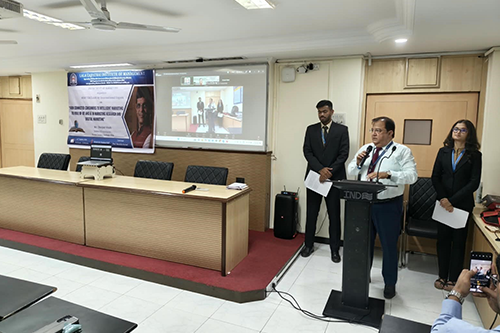
Name of the Event | Guest Lecture on the topic, “Youth Engagement and Collaboration in Mental Health” |
Resource Person |
Ms. Riddhi Doshi Patel, Corporate Trainer (Mental Health & Wellness), Founder LAJA, EmOcean |
Date |
7th October, 2025; Duration: (11.00 AM to 12.30 PM) |
Faculty In charge |
Dr. Suresh Suvarna (HoD, HR & Corporate Relations and Placement), & Mrs. Radha Iyer, Assistance Professor under the guidance of our Director Dr. H. J. Bhasin. |
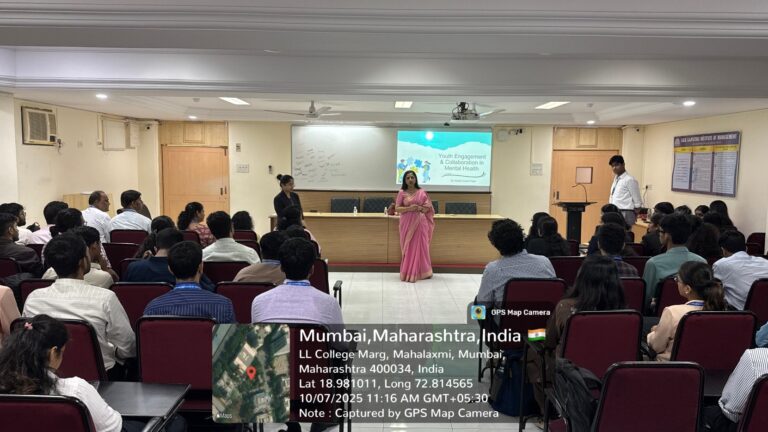
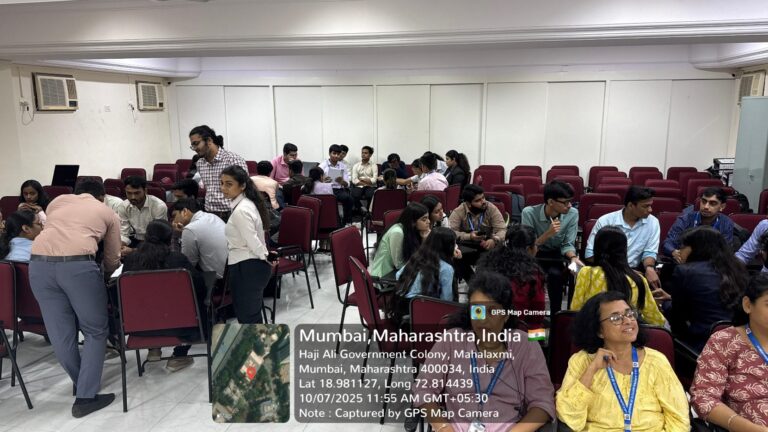
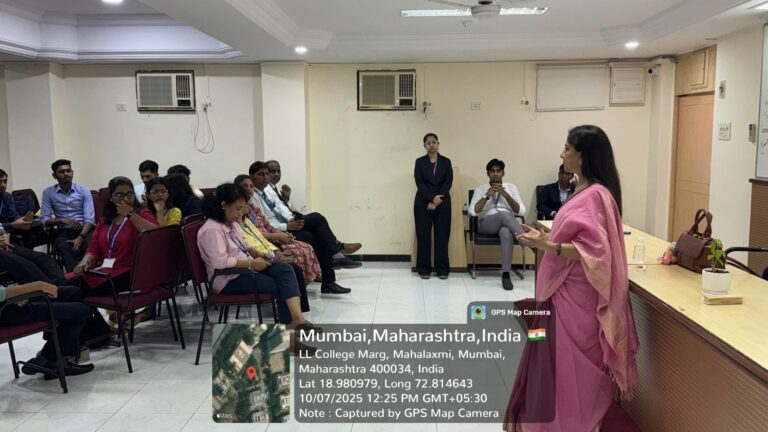
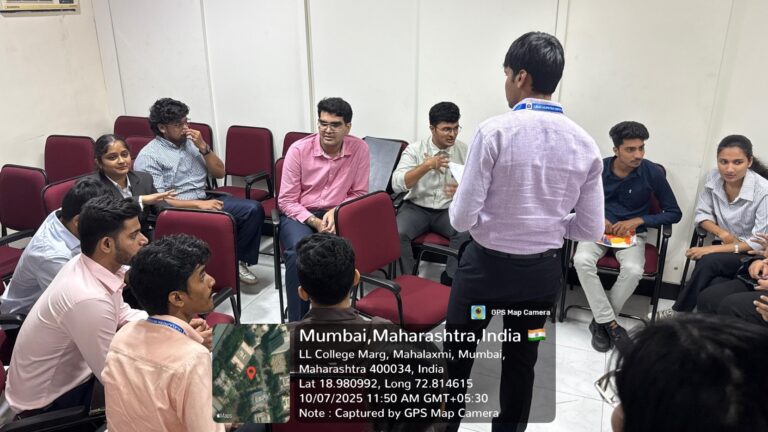
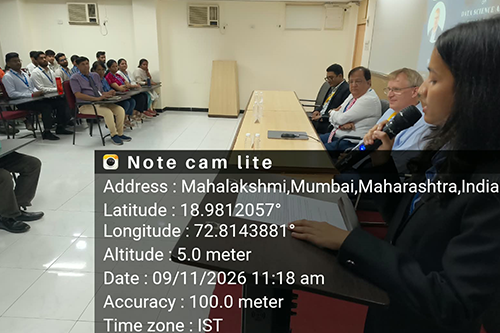
Description | Introduction A guest lecture on, “Youth Engagement and Collaboration in Mental Health” was organised to create awareness and promote emotional well-being among students. The session emphasized the importance of understanding one’s own perceptions, managing stress, and building a supportive peer network. The speaker inspired students to become active participants in maintaining not only their own mental health but also in contributing to a compassionate community culture. Key Discussion Points 1. Perception Gap and Mental Health: The session began with an insightful discussion on how the gap between self-perception and others’ perception can influence one’s mental state. Misunderstandings, self-doubt, and the need for validation often lead to stress and anxiety. Students were encouraged to introspect and align their self-image with authentic self-awareness rather than external judgements. 2. Students were divided into three groups; a topic was given for them to work on and present their insights. The following were presented by students: a. Influence of Peer-Pressure: Peer-pressure was identified as one of the major factors affecting youth mental health. The speaker elaborated on how the desire to fit in, emulate trends, or meet social expectations often causes emotional distress. Suggested solutions included: a. Building self-confidence and assertiveness; b. Setting personal boundaries; c. Surrounding oneself with supportive peers; and d. Engaging in constructive peer collaborations. b. Academic and Performance Stress: Academic pressure and performance anxiety were also addressed as significant stressors. The session provided strategies to manage these challenges, such as: a. Prioritization of tasks using Four-quadrant time management model; b. Breaking larger goals into smaller and achievable ones; c. Practicing mindfulness and relaxation techniques; and d. Seeking help from trusted ones. c. Cyber-Bullying and Coping Mechanisms: The discussion extended to cyberbullying, a growing concern among the youth. The speaker emphasized the importance of digital awareness and responsible online behaviour. 3. Interactive Activities: a. Students were made to write how they felt in the morning. b. Group activity to promote collaboration and team work and present the same to the audience. c. Students were made to write down their perception about themselves and perceptions of others about them. 4. Key Insights and Reflections: a. Reactions stem from the past while perceptions are shaped by judgements; b. Maintaining a toned and healthy body supports a balanced mind, reinforcing the interconnection between physical and mental health; c. Students were reminded to differentiate between inner-circle (people who truly matter) and acquaintances, to invest energy wisely in meaningful relationships; d. Practicing the four quadrant model for prioritization enables effective time and stress management; e. The final takeaway emphasized dedicating at least 10 minutes each day for oneself – for reflection, relaxation, and rejuvenation. Conclusion The guest lecture successfully highlighted the importance of self-awareness, emotional regulation, and supportive peer collaboration in fostering mental health. Students left with practical tools, positive affirmations, and renewed motivation to engage proactively in their personal and collective well-being.
|